

Introduction
For centuries, the silhouette of the dhow, with its majestic triangular sail, has been an enduring symbol of the Arabian Gulf. More than just a vessel, the dhow was the engine of the UAE’s economy, the vehicle for its cultural exchange, and the schoolhouse for its seafaring traditions. Before skyscrapers defined the skyline, the wooden hulls of dhows lined the shores of Dubai Creek, Khor Fakkan, and other ports, connecting the Trucial Coast to a vast Indian Ocean world. While the age of commercial sailing has passed, the legacy of the dhow is fiercely preserved through the survival of traditional boat building, a craft that embodies the Emirati people’s resilience, ingenuity, and profound connection to the sea.
The Dhow as a Lifeline: Trade and Pearling
The history of the dhow is inextricably linked to two primary industries: trade and pearling. These wooden vessels were the lifeblood of the region, transporting dates, dried fish, and pearls to markets in India, East Africa, and beyond. In return, they brought back timber, rice, textiles, and spices. The design of the dhow, characterized by its stitched or nailed plank construction and lateen sail, was perfectly adapted to the conditions of the Gulf—able to navigate both shallow coastal waters and the open sea. The pearling dhow, or “sambuk,” was the centerpiece of the four-month-long pearl diving season (Al Ghaws Al Kabir), carrying divers, pullers, and captains on a perilous journey that defined the social and economic calendar.
The Master Craftsman: The Art of the Al Kheil
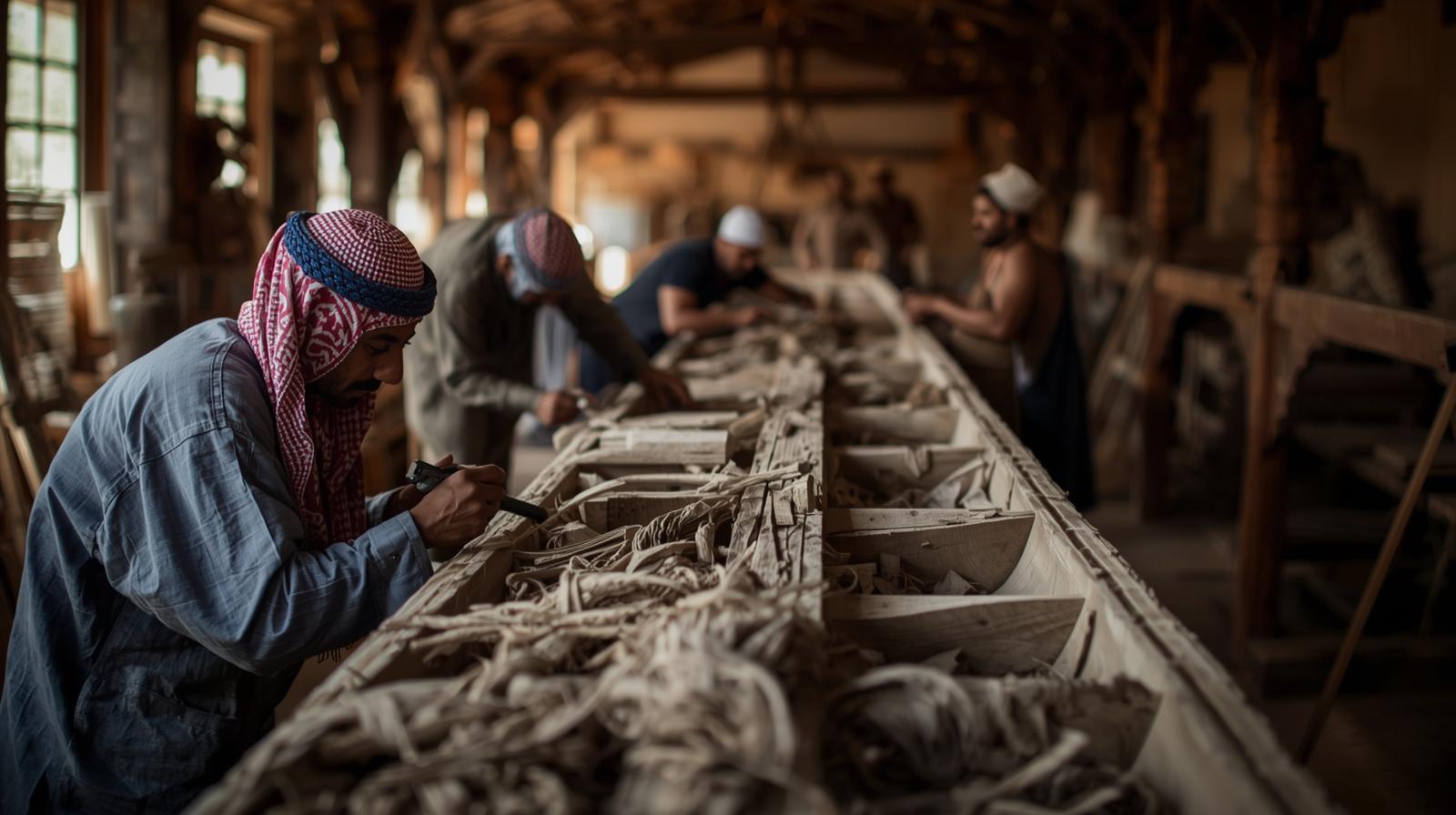
The construction of a dhow was not an industrial process but an art form, mastered by the shipwright, known as the “Al Kheil.” This knowledge was passed down through generations, a closely guarded secret of families and communities. The process began with the careful selection of wood, primarily teak imported from India, prized for its durability and resistance to rot. Without detailed blueprints, the Al Kheil worked from experience and mental templates, shaping the hull plank by plank. The most remarkable technique, now rare, was the “sewing” of the planks with cord made from coconut husk (coir), which provided a flexibility that was advantageous when navigating coral reefs. The smell of wood, tar, and salt air filled the shipyards, or “warsha,” which were vibrant hubs of craftsmanship and community.
A Fading Craft in a Modern World
The mid-20th century brought a swift decline to the era of the commercial sailing dhow. The collapse of the pearl industry and the rise of steel-hulled motorized ships rendered the traditional wooden dhow economically obsolete. The Al Kheil found their skills in less demand, and the younger generation was drawn to new opportunities in the burgeoning oil and urban economies. The warsha began to close, and the rhythmic sound of adzes and mallets grew faint. The knowledge of building a dhow from scratch, a process that could take over a year, was on the verge of being lost, threatening to sever a tangible link to the UAE’s maritime soul.
Preservation and Revival: Keeping the Tradition Afloat
Recognizing the cultural catastrophe this would represent, both the government and private enthusiasts in the UAE have launched significant preservation efforts. Traditional dhow building is now actively supported as a vital intangible heritage. Master shipwrights are employed to build and restore dhows, often for cultural events and races like the prestigious Al Gaffal race. Museums, such as the Dubai Museum and the Sharjah Maritime Museum, feature beautifully preserved dhows as centerpiece exhibits. Furthermore, the annual Dubai International Marine Club dhow races have sparked a renewed interest, creating a demand for newly built, traditionally crafted racing dhows. This modern application gives the craft a new purpose and economic rationale, ensuring that the skills of the Al Kheil are not just preserved in a museum but are actively practiced and celebrated.
Conclusion
The legacy of the dhow is a powerful reminder that the UAE’s modern identity as a global trading hub has deep historical roots. The preservation of traditional dhow building is not an exercise in nostalgia; it is an active commitment to honoring the vessel that carried the nation through its most challenging and defining eras. Each newly built dhow is a testament to the skill of the Al Kheil and the enduring spirit of the Emirati people—a spirit that learned to read the stars, harness the wind, and navigate vast oceans, laying the foundational ethos for a nation that continues to look boldly toward the horizon.